Home / Work / Junglee Rummy KYC
Product Design B2C · Real Money Gaming Compliance UX Conversion

Redesigning Junglee Rummy's KYC Journey

How a smarter manual upload flow helped bring KYC verification close to perfection.

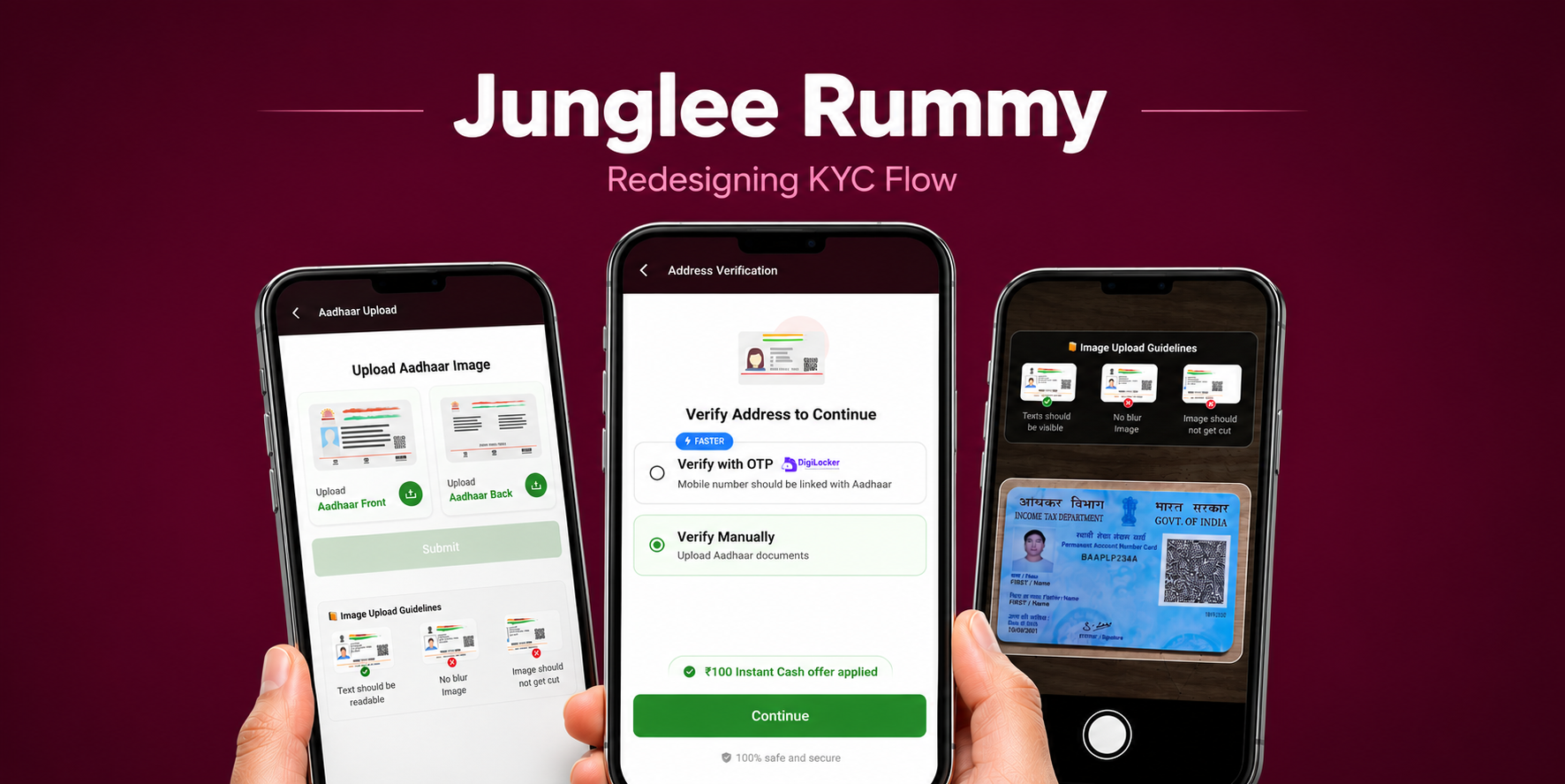
Junglee Rummy KYC redesign — hero
My RoleDesign Lead
Team1 Junior Designer · 2 PMs · 1 Developer
ObjectiveImprove success rate of manual KYC uploads
DomainReal Money Gaming · Compliance

For a real-money gaming product like Junglee Rummy, KYC is a critical business journey.

As per compliance, users must be KYC verified before they can play cash games. So KYC is not just an identity check — it is the gateway between user intent and revenue.

Many users in our target audience were not very familiar with automated KYC platforms like DigiLocker, so they often moved toward the more familiar manual document upload route.

The Problem

More than 60% of manual KYC uploads were going into review instead of getting auto-approved.

This meant users had to wait at the exact moment they were ready to start playing. For the business, every delayed or failed KYC directly impacted add-cash conversion and revenue.

How We Conducted the Investigation

Discover

As a team, we reviewed the uploads that failed automated verification and moved into manual review.

The pattern was clear: most failures were caused by poor or incorrect uploads. Many images were blurry, cropped, out of focus, or had unreadable text. In some cases, the full ID was not visible. We also found users uploading random images or selfies instead of their ID proof.

The flow was letting users submit bad uploads before guiding them on what a valid document image should look like.

The Call We Made

Define

We made the strategic call to focus on two things at the same time:

1. Educate before upload
Guide users at every step on what a good document image looks like — clear, readable, properly framed, and complete. Help them upload the right image the first time.
2. Prevent errors before submission
Instead of showing a polished error message after a failed upload, stop the failure from happening in the first place. Prevention, not recovery.

The design direction became simple: help users understand what to upload, verify the image before submission, and reduce the chances of failure upfront.

Leading the Design & Build

Develop · 1. Educate users during upload

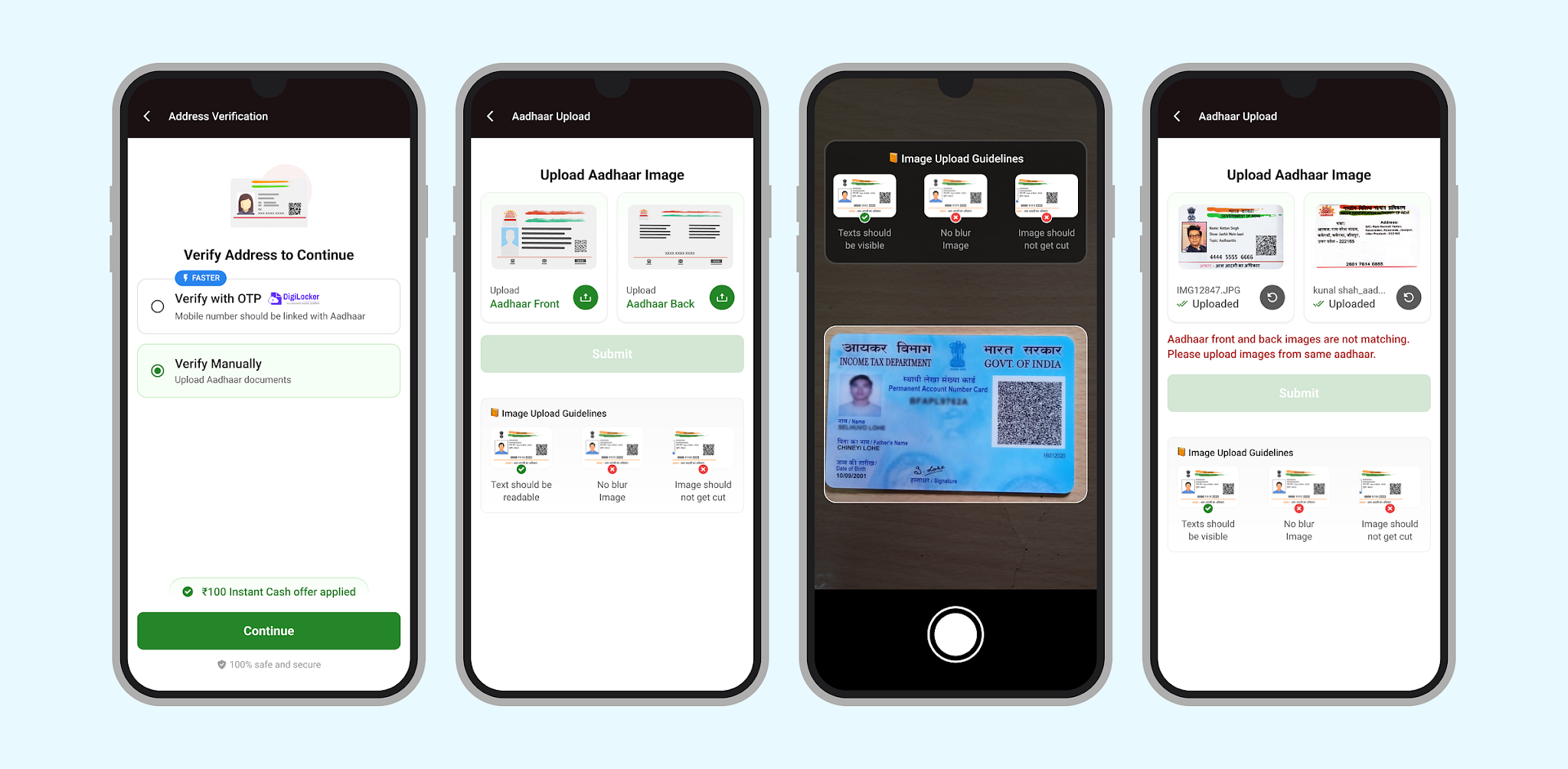
The first step was to guide users before they clicked the image. We added clear instructions at the upload stage, telling users what a good ID photo should look like.
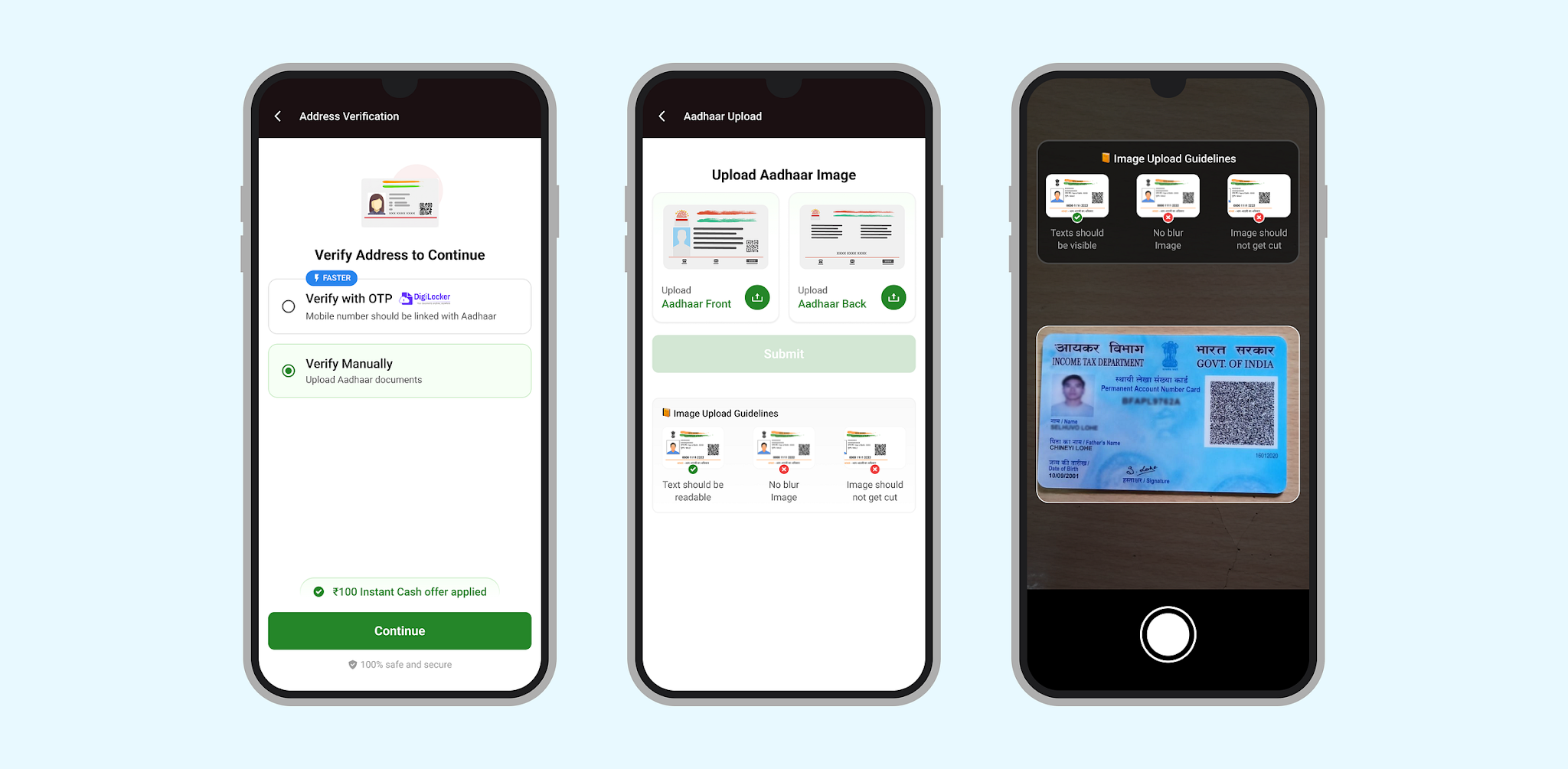
Upload instructions guiding users on a valid ID photo

We also added a designated capture area on the camera screen, giving users a visual guardrail to align their ID before taking the photo. This made the upload step feel more guided and reduced the chances of users submitting unusable images.

Develop · 2. Prevent errors before submission

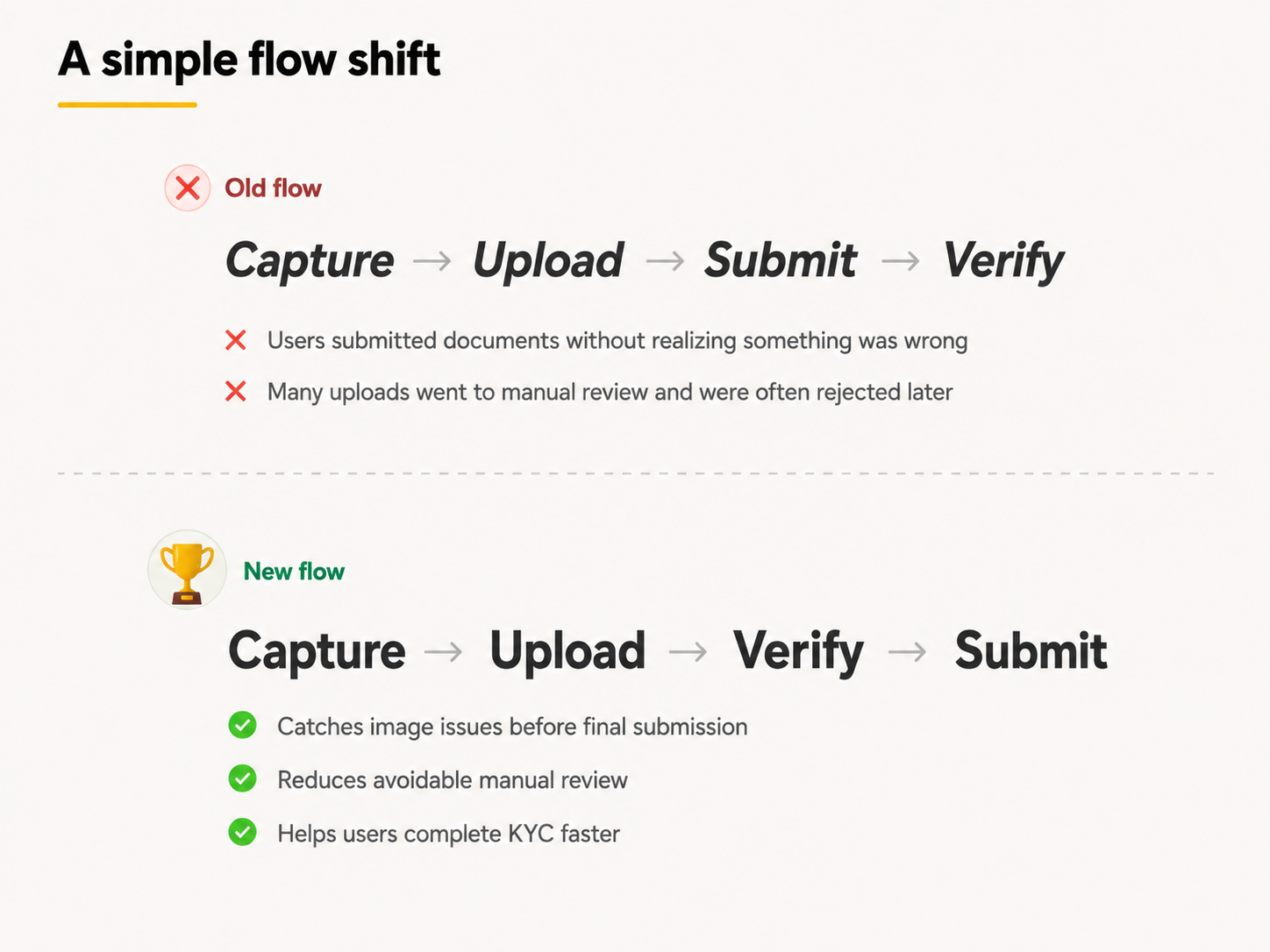
The second step was to change when verification happened. Earlier, users were uploading and submitting documents without realizing something was wrong. These uploads would then move into manual review, which took more time and, in many cases, still ended in rejection after almost an hour.

Now, users could catch mistakes before final submission instead of waiting for the system to reject the upload later.

Verifying the image before submission to prevent failures

The shift was simple but important: we moved from showing errors after failure to preventing failure before submission.

Redesigned manual KYC verification flow

The Outcome

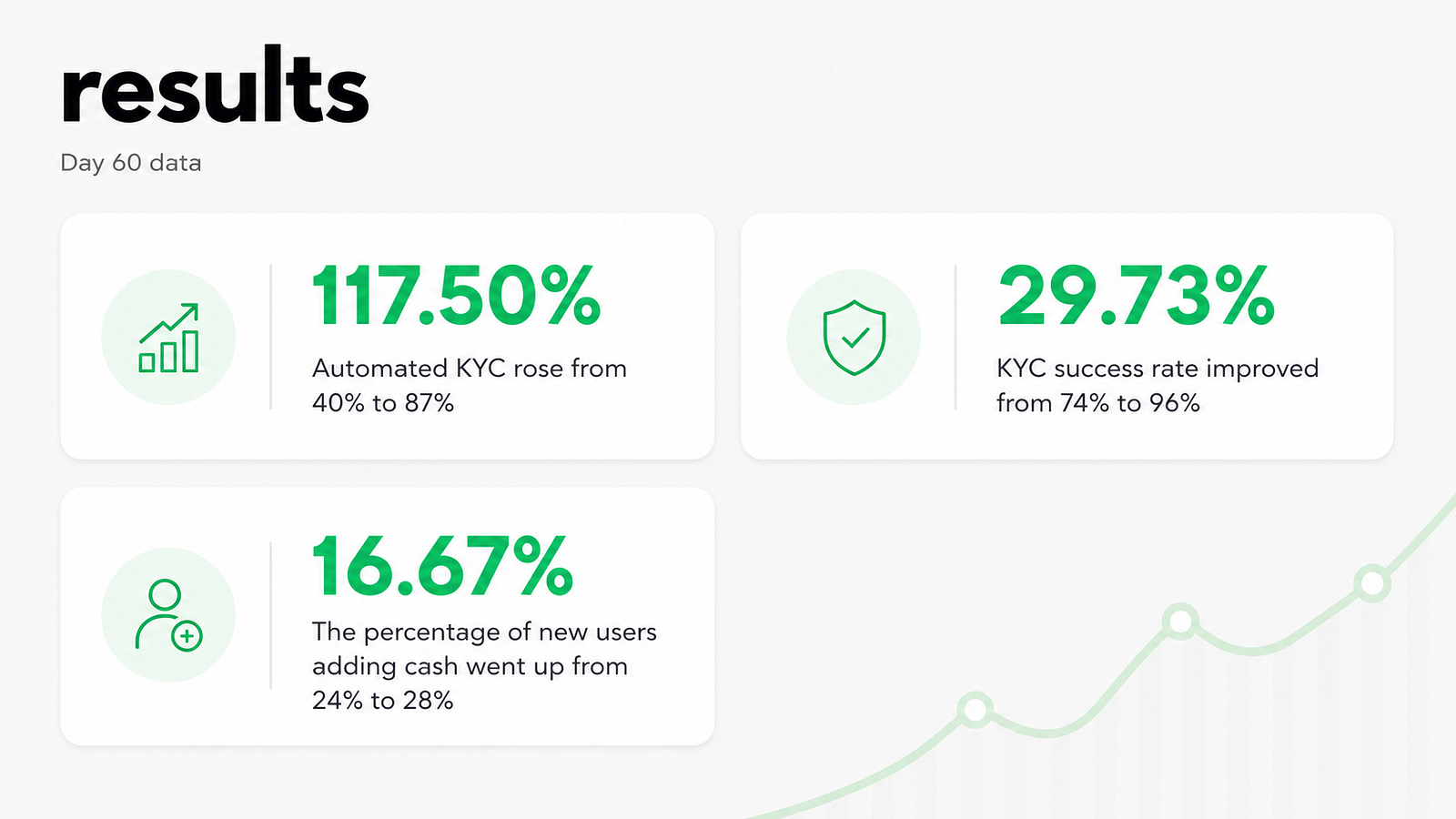
The redesigned KYC flow showed strong impact within the first 60 days. The biggest win was simple: more users were able to move smoothly into the cash-game journey.

Outcome of the KYC redesign within the first 60 days

What This Taught Me as a Design Leader

Interested in working together?

Get in Touch